Taking a screenshot of your device
If you want to capture some information that’s displayed on your screen, such as a receipt, it can often be helpful to take a screenshot.
Luckily this is easy on all devices, Windows, Mac, iOS and Android.

Tekee Tim is full of useful hints and tips to get more out of your computers, tablets, smart phones and systems, and online services, so bookmark this page and keep coming back for more tips.
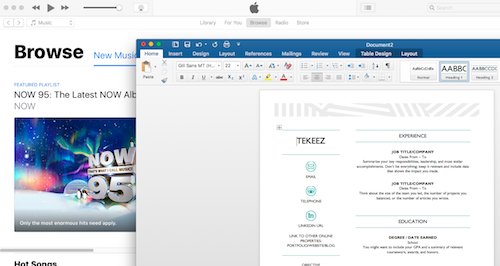
If you want to capture some information that’s displayed on your screen, such as a receipt, it can often be helpful to take a screenshot.
Luckily this is easy on all devices, Windows, Mac, iOS and Android.

With Apple Music's increasing popularity, Tekee Tim thought it would be a good time to show you how to get the best from it.
The battery in your mobile device is very important, without it, your device is completely useless so it's good to know how to make it last as long as possible and, as a lot of newer devices don't let you easily replace the battery, how to prolong its life.

When you've had your computer for a while, it's easy to start to lose track of where your files are stored, especially if you've created a lot of folders and have to spend time digging around for the correct file.
Fortunately, with both macOS and Windows, it's easy to find the files you need without having to do much work. You can also use the search tool to find applications, photos, settings as well as documents and emails, so you should be able to find anything you need at any time!

Occasionally, when you're connected to a strong WiFi signal, you may find that you can't actually call up any web pages or send any emails. There are a few reasons why this can be the case and we'll run through some ideas that can help you get online here.

Keeping your devices up to date is always very important, software updates allow bugs to be fixed, security issues to be addressed and new features to be added to all your devices. You'll usually get notified if there are any updates for your devices, but here we'll run through the most common machines and how you can check to see if you have any updates waiting to install.

One of the new features for the iPhone in iOS 11 is a one handed keyboard. If you have one of the larger iPhones and regularly use it with one hand, this can make typing much easier.
Occasionally, when you send an email you might get an email back telling you that it couldn't be delivered. There are many reasons why an email fails to get delivered. The return email will usually tell you what the problem is and we'll run through a few of the more common reasons here.
If you replace your iPhone or iPad, it's easy to get it back up and running on the new device by using your iCloud backup and we'll show you how to do that here.

If you have one of Apple's new Macs using their own Apple Silicon processor, then you can install a selection of iPhone and iPad apps and use them on your Mac as you would a normal Mac app. At the time of writing this tip, the new MacBook Air, MacBook Pro and Mac mini all feature the new Apple M1 chip.
In today's Tekeez Tip, we'll show you how to find and install an iPhone or iPad app on your new Mac.
If you're reading a long article on a website, all the surrounding adverts, pictures and links to other pages can get distracting, most modern web browsers now have a Reader Mode or Reader View which lets you get rid of the distractions and concentrate on what you're trying to read.
In this Tekeez Tip, we'll show you how to turn this mode on to make it easier to read the story you're trying to focus on.
These days we all have passwords for everything and they all need to be unique, secure and cryptic but easy to access when you need them.
For years now we've been using and recommending 1Password as an easy way to create, store and enter passwords that match all the requirements above.


Tekeez support both PC/Windows users and Mac users equally, so whether you have a Mac or a PC we can help.
Tekeez are proud to have been providing legendary IT Superhero services and support for 30 years, since 1994.
Why not try our services and discover the secret of our success?